Independent study finds Waymo vehicles crash far less often than human drivers, with caveats
Researchers at the Insurance Institute for Highway Safety report that Waymo vehicles were involved in 68% fewer crashes per mile than human drivers, though they say the data has limits and the technology is still early.
By Juan Gonzalez ·
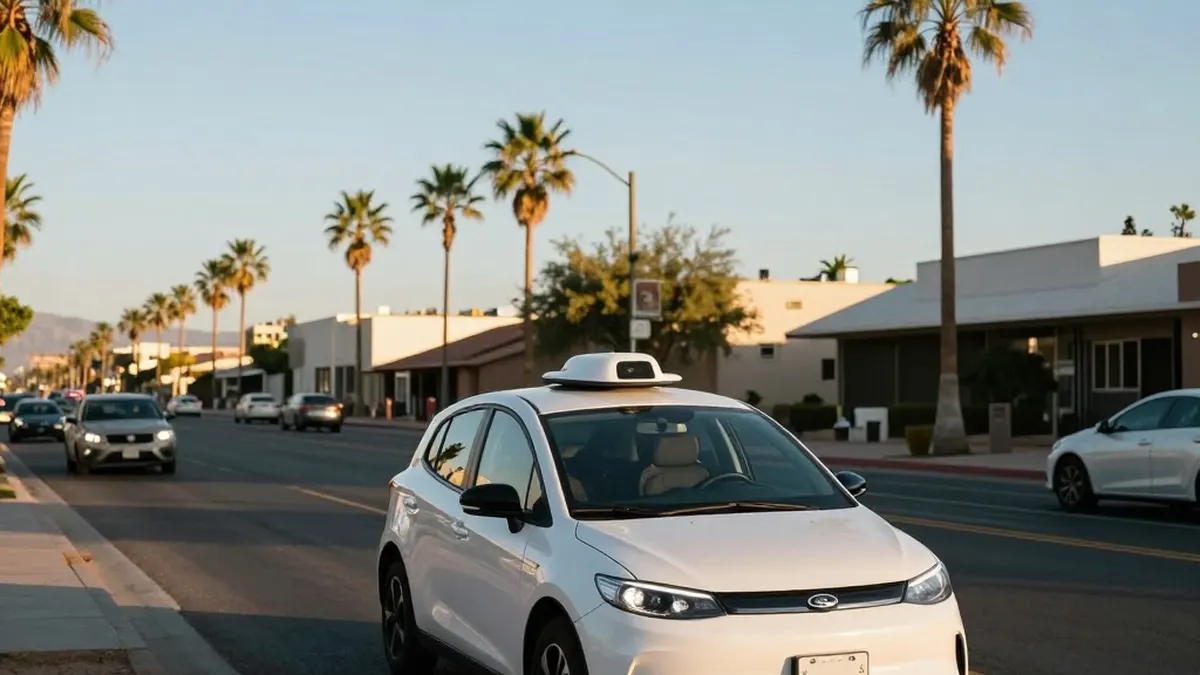
An independent study from the Insurance Institute for Highway Safety has found that Waymo's autonomous vehicles are involved in substantially fewer crashes than human drivers, largely echoing what the company has said about its own safety record. The findings come as hundreds of Waymo cars operate on roads across the Phoenix area and as the company says it will return to freeways after a software update aimed at improving how the vehicles handle construction zones.
David Kidd, the institute's vice president for vehicle research and a lead author of the paper, discussed the results in an interview with KJZZ's The Show. Using a method different from Waymo's, the researchers found the company's vehicles had 68% fewer crashes per mile than human drivers. For crashes involving an injury or reported injury, the rate was 81% lower.
The analysis covered Phoenix, Austin, Los Angeles and San Francisco. In Phoenix, the reduction was larger, at 76% fewer crashes per mile. Kidd cautioned against reading much into that gap, however. Of the nearly 1,000 crash narratives the team reviewed, only 64 involved Waymo vehicles across all the regions, which he said is too few to support a claim that the cars perform better in one city than another.
The method itself carries limitations. Companies operating automated vehicles must report certain crashes to the federal government, a requirement that now applies to incidents causing at least $1,000 in damage or involving vulnerable road users such as pedestrians and cyclists. Researchers read those narratives to decide whether each would typically be reported to police, allowing a comparison with police-reported crashes involving human drivers.
Mileage is a bigger problem. Kidd said the government does not require companies to report how far their automated vehicles travel, and that Waymo provides the figure voluntarily. That figure is what allows researchers to turn a crash count into a rate per mile, which he described as the most challenging part of the work.
Kidd attributed some of the safety advantage to the way the vehicles are programmed. Waymo cars follow speed limits, are never impaired or distracted, and require passengers to wear seat belts, all areas where human drivers struggle and which contribute to many fatal crashes.
The vehicles are not free of trouble, though. Kidd said they have difficulty interacting with human drivers. Among the most common crashes were rear-end collisions in which another driver struck the Waymo, and angle or T-bone crashes involving people pulling out of parking lots or turning in front of the vehicle. Because the cars may not act as people expect, Kidd said, those differences can lead to conflict even when the vehicles are driving conservatively. He added that humans sometimes must bend the rules, such as pulling off the road to get around an obstacle, a situation computer-driven vehicles may handle less fluidly.
Kidd said crashes will always occur with these vehicles, but that following traffic rules and ensuring riders buckle up should make them less severe. He stressed that the technology remains in its early stages, with limited deployments mostly in urban areas and typically in favorable conditions, such as sunny weather, well-marked roads and extensive mapping. Human drivers, he noted, handle night driving and winter weather. "There's a long way to go with these automated vehicles," he said, "but the early signs are promising."
Source: KJZZ